
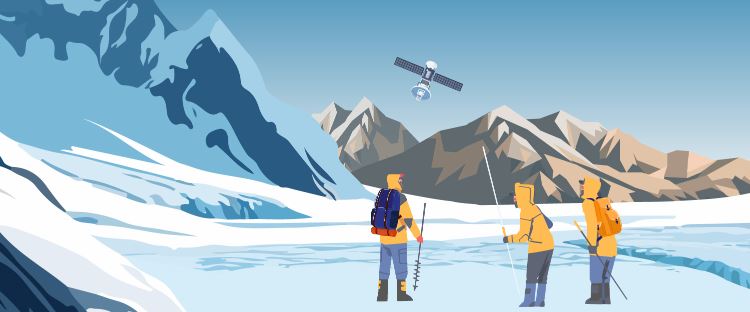
We’re excited to share that our recent GlaMBIE paper on global glacier change has been reworked into a student-friendly scientific article in Science Journal for Kids titled What are good ways to track melting glaciers?
This version introduces students to how and why scientists track glacier change — helping them understand both the science and the methods behind measuring ice loss. The article translates complex data and methods into clear explanations suitable for classrooms and curious readers alike. Read the abstract below.
Abstract
Have you ever watched an ice cube melt on a hot day? Well, that’s happening to glaciers all over the world. Glaciers have important impacts on water resources, runoff, and sea level rise. Keeping track of how glaciers change is important to predict and plan for these downstream impacts.
We wanted to create a more recent record of how glaciers have changed from 2000 to 2023. So we compared and combined data about glaciers collected using different methods. We found that glaciers worldwide lost about 5% of their mass in this period. In different regions glaciers lost between 2% and 39% of their mass. We saw slight differences between data collection methods that could add up over time. We expect glacier loss to continue, which will lead to some regions losing their glaciers by 2100. It’s important to use the most accurate and up-to-date information to make predictions about glacier loss in the future.
The student article highlights how measurement methods — from satellites to ground surveys — shape our understanding of glacier change. It also emphasizes the importance of consistent, accurate observations for predicting future water availability and sea level rise.
We’re thrilled to see our work reaching classrooms and inspiring the next generation of scientists to think critically about climate data and environmental change. By sharing our findings in accessible formats, we hope to make glacier science understandable and exciting for everyone — from students exploring Earth’s systems to educators guiding discussions about our changing planet.